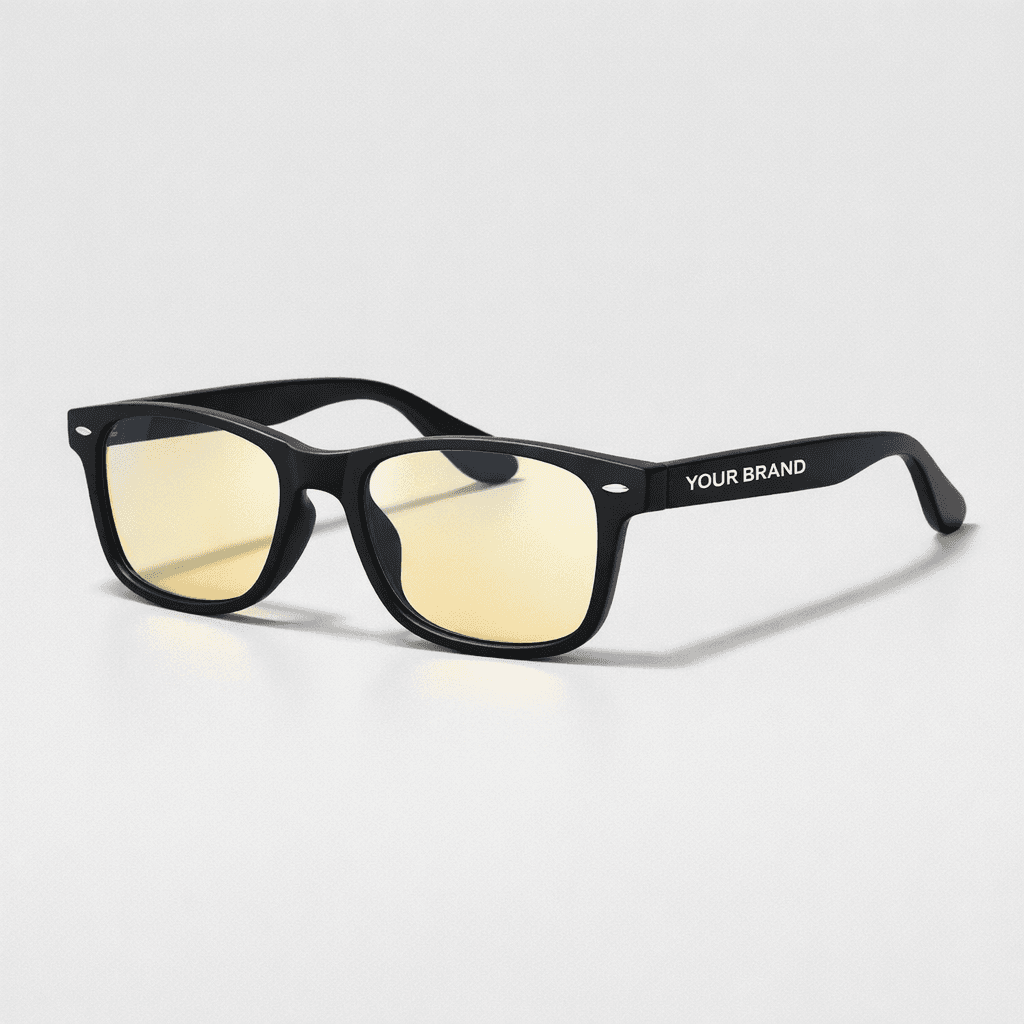
Product opportunity
Is blue light blocking glasses a good private-label product?
Blue light filtering glasses are often marketed with broad wellness promises, but a responsible white-label product should begin with measurable optics and restrained claims. Buyers need to define whether lenses are clear or tinted, plano or prescription-ready, the wavelength range and transmission method being discussed, overall visible-light transmission, colour shift, optical power tolerance, coatings, frame construction and fit. Current professional guidance does not support promising that blue-blocking lenses improve visual performance, relieve eye strain, improve sleep or protect macular health in the general population. Build the product around verified lens characteristics, comfort and style instead.
The commercial case
The category can serve office workers, students, gamers, phone-accessory shoppers, fashion buyers and promotional programmes. Frames are compact, brandable and easy to demonstrate, but product credibility is easily damaged by distorted lenses, uncomfortable fit, peeling coatings or unsupported health language. Commercial planning should separate fashion eyewear from products making medical, protective or prescription claims, because classification and obligations can change by destination and intended use. Approve model-specific lens reports, frame materials, dimensions, artwork, case and cleaning cloth, then include inspection and complaint handling in landed-cost planning.
Market fit
Demand, buyers, and the brand angle
Customers can compare frame style, weight, fit, reflections, lens colour and visual distortion even when they cannot verify a blue-filter percentage themselves. Suppliers may quote a percentage without identifying wavelength, test method or whether the result applies to the exact production lens. Ask for a transmission curve and report tied to the model, then ensure consumer copy describes only what the evidence shows. Avoid claims about preventing headaches, eye damage, sleep problems or digital eye strain unless qualified legal and clinical review supports them in the destination market. Clear education and honest optical specifications can be a stronger brand position than exaggerated protection language.
What drives demand
- Screen-heavy work, study and entertainment create interest in screen-related accessories.
- Frames combine functional positioning with fashion and personal style.
- Compact eyewear can be bundled with laptop, gaming and office products.
- Cases, cloths and frame colours provide visible white-label differentiation.
Likely customer groups
- Office workers, students and frequent screen users
- Gaming, computer-accessory and lifestyle retailers
- Optical and fashion brands with appropriate professional oversight
- Corporate wellness and promotional-gifting buyers
Recommended white-label angle
Create a style-led screen-eyewear range with transparent specifications: frame measurements, weight, lens tint, coating, intended non-prescription use and included care accessories. Customization can include frame colour, temple logo, metal detail, lens option, case, cloth and retail card. Offer different bridge and temple dimensions rather than presenting one fit as universal. Freeze the exact lens material, coating stack and frame components after approval because visually identical lenses can have different transmission and distortion. Every claim on the product page and packaging should trace to a report for the final production lens, not a generic demonstration card.
Build the brief
Specifications to settle before requesting quotes
Send every shortlisted supplier the same written brief. That makes quotations comparable and reduces substitutions after sample approval.
- Lens transmission
- Define the required spectral transmission curve, wavelength range, visible-light transmission and test method for the exact lens rather than accepting an isolated percentage.
- Optical quality
- Control unintended refractive power, prism, distortion, surface defects and left-right consistency for the intended plano or prescription-ready format.
- Lens colour and coatings
- Approve tint, colour shift, anti-reflective or hard coating, adhesion, abrasion resistance and reflected colour under consistent lighting.
- Frame material
- Identify the actual frame, temple and metal materials, finish, odour, restricted-substance requirements and resistance to cracking and deformation.
- Fit dimensions
- Record lens width and height, bridge, temple length, frame width, weight and tolerances; review more than one fit where the audience is broad.
- Hinges and assembly
- Specify hinge type, screw retention, opening resistance, alignment, temple symmetry and cycle testing.
- Claims and intended use
- State whether the product is fashion or non-prescription eyewear and restrict marketing to model-specific evidence reviewed for each destination.
- Accessories and pack
- Approve case, cleaning cloth, care instructions, warnings, model identification, barcode and protective retail packaging.
Customization ideas
- Clear, lightly tinted and style-specific lens options with evidence
- Multiple frame widths, bridge shapes and colour collections
- Temple print, laser mark or small metal brand detail
- Branded case, cleaning cloth and evidence-led information card
Possible market positions
- 1. Evidence-led screen eyewear without exaggerated health promises
- 2. Lightweight office and study frame collection
- 3. Gaming accessory bundle with case and cleaning cloth
- 4. Style-first non-prescription eyewear in multiple fit options
Supplier due diligence
Ask better questions. Inspect the answers.
Questions for potential suppliers
- 1Can you provide the full transmission curve and model-specific report for the exact production lens and coating?
- 2How are unintended optical power, prism, distortion, lens colour and coating defects controlled in production?
- 3What are the actual frame and lens materials, and which destination-specific substance tests cover them?
- 4Which dimensions and tolerances define fit, and can you supply samples from production tooling rather than hand-finished prototypes?
- 5Which claims do your reports support, and will you accept written control preventing unsupported claims or component substitutions?
- 6How are hinges, screws, lens retention, frame alignment, logo durability and final pack inspected?
Quality-control checklist
- Confirm model identity and compare lens transmission evidence with the approved lens and coating specification.
- Inspect lenses for waves, unintended magnification, prism, scratches, bubbles, edge chips and coating variation.
- Measure frame width, bridge, temples, lens dimensions and weight across batch samples.
- Cycle hinges and inspect screw retention, frame twist, temple symmetry and lens security.
- Check colour and logo against controlled references and test coating and branding durability by the agreed method.
- Verify case, cloth, claims, instructions, warnings, model code, barcode and protective packaging.
Protect the order
Risks to resolve before production
Unsupported health claims
Promises about eye strain, sleep, headaches or retinal protection may exceed the evidence and change the product's risk and regulatory position.
Meaningless filter percentage
A percentage without wavelength range, transmission curve and test method cannot describe how the production lens behaves.
Optical distortion
Plano-looking lenses can still introduce power, prism or waves that make wear uncomfortable and generate returns.
Fit and coating inconsistency
One-size assumptions, weak hinges and variable coatings can create complaints even when the lens report is acceptable.
Shipping and landed-cost planning
Glasses are light but vulnerable to lens scratching, frame distortion and hinge damage. Use a protective sleeve or case that separates the lenses from abrasive surfaces and prevents heavy master-carton compression. Confirm the final branded individual pack, carton dimensions, units per carton and gross weight before calculating freight. Control humidity where coatings, metal parts or packaging may be affected, and prevent dark cases or printed materials from transferring colour. Pre-shipment inspection should verify model and colour assortment, lens protection, frame alignment, accessories, labels, carton markings and traceability.
Product sourcing FAQ
Questions founders ask before sourcing
Open any question to read the answer.
Can blue light filtering glasses be white labelled?
Yes. Lens specification, frame, colour, fit, temple branding, case, cloth and packaging can be controlled. The buyer should also control claims and retain model-specific optical evidence for the final production lens.
Do blue light glasses reduce digital eye strain?
Current professional guidance says the best available evidence does not support promising relief from eye fatigue or visual discomfort in the general population. Marketing should avoid that promise and focus on verified lens characteristics, comfort and style.
What does a blue-light filter percentage mean?
It is incomplete without the wavelength range, full transmission curve and test method. Ask the supplier to show how the exact production lens transmits light across the relevant spectrum.
How is optical quality checked?
Inspect unintended refractive power, prism, distortion, surface defects, lens alignment and left-right consistency using suitable optical equipment and agreed tolerances.
What should be approved on the frame?
Approve materials, finish, dimensions, weight, fit, hinges, screws, lens retention, colour, logo and restricted-substance evidence applicable to the target market.
Can these glasses make medical or protective claims?
Claims can change legal classification and evidence requirements. Obtain destination-specific professional review before using medical, therapeutic, disease-prevention or protective language.