Product opportunity
Is bluetooth beanie hat a good private-label product?
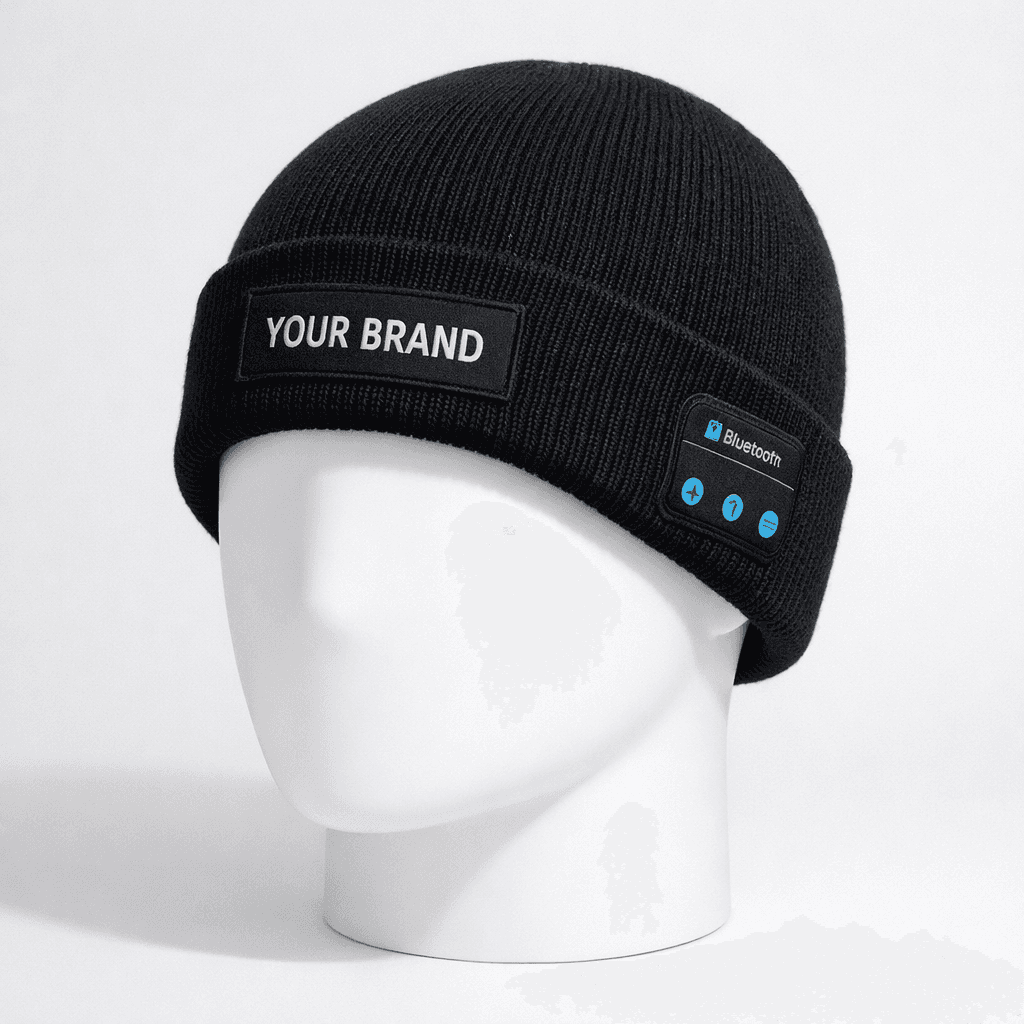
A Bluetooth beanie combines a knitted garment with a rechargeable wireless audio product, so it should never be sourced as an ordinary hat with a cheap speaker inserted. The commercial brief must define both systems: yarn and knit construction, fit, seams and care on one side; chipset, Bluetooth design, speakers, microphone, controls, battery, charging and protective enclosure on the other. Buyers also need a practical method for removing the electronics before washing. Compare suppliers using the same audio, battery and garment specification, and verify the compliance path for every country where the branded product will be distributed.
The commercial case
The product can appeal to commuters, outdoor workers, travellers, runners and gift buyers who want hands-free audio without separate earbuds. Its novelty makes it demonstrable, but repeat sales and reviews depend on comfort, call quality, stable pairing and reliable charging rather than appearance alone. A brand should decide whether it is selling a winter beanie, lightweight lifestyle cap or sports accessory because fit, warmth and moisture exposure differ. Budget for product qualification, destination testing, battery documentation, inspection, replacement handling and packaging. A lower module quotation can become expensive when batteries, controls or microphones fail after sale.
Market fit
Demand, buyers, and the brand angle
Customers compare warmth, stretch recovery, speaker position, volume, call clarity, control usability, battery behaviour and how easily the electronics can be removed for washing. Avoid promising a precise wireless range, play time, charge time or water resistance until the production design has been tested under a defined method. The Bluetooth name and logo carry qualification and brand-use obligations for products sold under a buyer's brand; supplier paperwork for a component is not automatically proof that the final branded product is correctly qualified. Radio, electrical, chemical, textile-labelling and battery-shipping requirements also vary by destination and must be reviewed before ordering.
What drives demand
- Users can listen and take calls without managing separate earbuds.
- The combined fashion and technology format works for gifts and demonstrations.
- Commuters and outdoor users value hands-free controls in cooler conditions.
- Custom knit colours and patches support lifestyle, team and promotional branding.
Likely customer groups
- Commuters, travellers and outdoor workers
- Music, lifestyle and winter-accessory retailers
- Sports, university and youth-focused brands
- Corporate and promotional-gifting buyers
Recommended white-label angle
Differentiate through a coherent garment-and-audio experience: a knit weight suited to the climate, speaker pockets aligned with the ears, intuitive controls and a removable module that does not distort the hat. Customization can cover yarn colour, knit pattern, woven patch, embroidery, control-panel trim, voice prompts, retail insert and gift box. Keep the radio and battery design fixed after qualification and testing; changing a chipset, antenna, cell or enclosure may affect evidence and performance. The brand owner should verify the applicable Bluetooth qualification route under its own membership and ensure the marketed product name and model match the relevant listing.
Build the brief
Specifications to settle before requesting quotes
Send every shortlisted supplier the same written brief. That makes quotations comparable and reduces substitutions after sample approval.
- Bluetooth design
- Record chipset, design identifier, supported profiles, marketed product name and the qualification evidence applicable to the final branded model.
- Audio performance
- Define speaker size and position, useful volume, distortion limits, left-right balance and microphone clarity using agreed test recordings and devices.
- Battery and charging
- Specify cell source, rated capacity, protection circuit, connector, input limits, charge indication and production battery documentation without relying on unsupported runtime claims.
- Controls and prompts
- Approve button functions, tactile feedback, accidental-press resistance, indicators, voice prompts and behaviour for calls, pairing and low battery.
- Knit and fit
- Define yarn fibre, knit structure, weight, finished dimensions, stretch recovery, seam construction, colourfastness and size tolerance.
- Module placement
- Control pocket dimensions, speaker alignment, cable routing, control access and the removal and reinsertion method.
- Care and moisture
- Provide clear electronics-removal and garment-care instructions; make moisture-resistance claims only when the complete relevant assembly has been tested.
- Compliance pack
- Require model-specific reports and records for radio, electrical, battery transport, materials, labels and destination requirements, reviewed by a qualified specialist.
Customization ideas
- Climate-specific lightweight or warm knit constructions
- Embroidered logo, woven patch or branded cuff
- Coordinated control panel, prompts and retail insert
- Gift set with charging cable and storage pouch
Possible market positions
- 1. Hands-free commuter beanie with removable audio
- 2. Warm outdoor-work hat with simple tactile controls
- 3. Branded university or team lifestyle accessory
- 4. Gift-ready wireless audio hat with clear care guidance
Supplier due diligence
Ask better questions. Inspect the answers.
Questions for potential suppliers
- 1Which exact Bluetooth design, chipset and listing apply to the final branded model, and what must the brand owner complete before sale?
- 2Which model-specific radio, electrical and materials reports cover the unchanged production configuration and intended destinations?
- 3What cell is fitted, what protection is included, and can you provide the required battery test summary and shipping documentation for that cell?
- 4How are speaker balance, microphone clarity, pairing, buttons, charging and battery behaviour tested on every production batch?
- 5How are electronics removed for washing, and how do you prevent cable, pocket and connector damage during removal and reinsertion?
- 6Which yarn, knit, dimensions and colour references will be locked, and how will substitutions be controlled?
Quality-control checklist
- Verify model identity, markings, supplied documents and hardware against the approved qualified production configuration.
- Pair samples with representative phones and test reconnection, audio channels, microphone, buttons, prompts and charging.
- Inspect batteries, protection, connectors, cable routing, enclosures and signs of swelling, damage or poor assembly.
- Measure hat dimensions and assess knit defects, seams, stretch recovery, colour consistency and speaker alignment.
- Remove and reinstall the electronics repeatedly, then check pockets, cables, controls and audio operation.
- Verify accessories, care and safety instructions, labels, retail pack, carton markings and traceability.
Protect the order
Risks to resolve before production
Qualification mismatch
A component certificate or supplier listing may not cover the final product name, brand or modified radio design, creating enforcement and customs risk.
Battery inconsistency
Uncontrolled cell substitutions can alter runtime, charging safety, transport evidence and failure rates after approval.
Poor audio placement
Speakers that move away from the ears or a microphone buried in fabric can make a technically working product frustrating to use.
Unsafe washing
Vague removal instructions or difficult pockets encourage users to wash the electronic module or damage cables and connectors.
Shipping and landed-cost planning
This product contains a lithium battery and wireless electronics, so shipping must be planned from the exact production configuration rather than treated like ordinary apparel. Obtain the current model-specific battery test summary, cell and battery identification, packing method and other documents required by the carrier, route and destination. Protect control modules from activation, short circuit, crushing and moisture, and pack the hat so speakers and connectors are not bent. Confirm individual and master-carton dimensions, gross weight, labels, quantity and traceability after the final retail pack is approved. A freight provider should review the documentation before cargo is accepted.
Product sourcing FAQ
Questions founders ask before sourcing
Open any question to read the answer.
Can a Bluetooth beanie hat be white labelled?
Yes, but branding a wireless product creates responsibilities beyond applying a logo. The final product name, radio design, qualification route, destination compliance, battery documents, markings and packaging must all be reviewed for the branded model.
What should be tested on a Bluetooth beanie sample?
Test pairing, reconnection, audio balance, useful volume, microphone clarity, controls, charging, indicators, battery behaviour, speaker position, fit, knit recovery and removal and reinsertion of the electronics.
Can a supplier qualify the product for my brand?
Supplier design information may support the process, but current Bluetooth SIG guidance states that a supplier cannot complete another company's product qualification. The brand owner should confirm its own applicable route before distribution.
Is a Bluetooth beanie washable?
The textile portion may be washable under its approved care method after all electronics are removed. Instructions must show removal and reinsertion clearly; never assume the electronic module can be washed or immersed.
Which battery documents should be requested?
Request documents tied to the exact fitted cell and battery assembly, including the current test summary and the information required by the selected carrier and route. Have a freight specialist review them before shipment.
Why should the electronic design be frozen before production?
Changing the chipset, antenna, battery, charging circuit or enclosure can change performance and may invalidate or alter the evidence reviewed for qualification, destination compliance and transport.