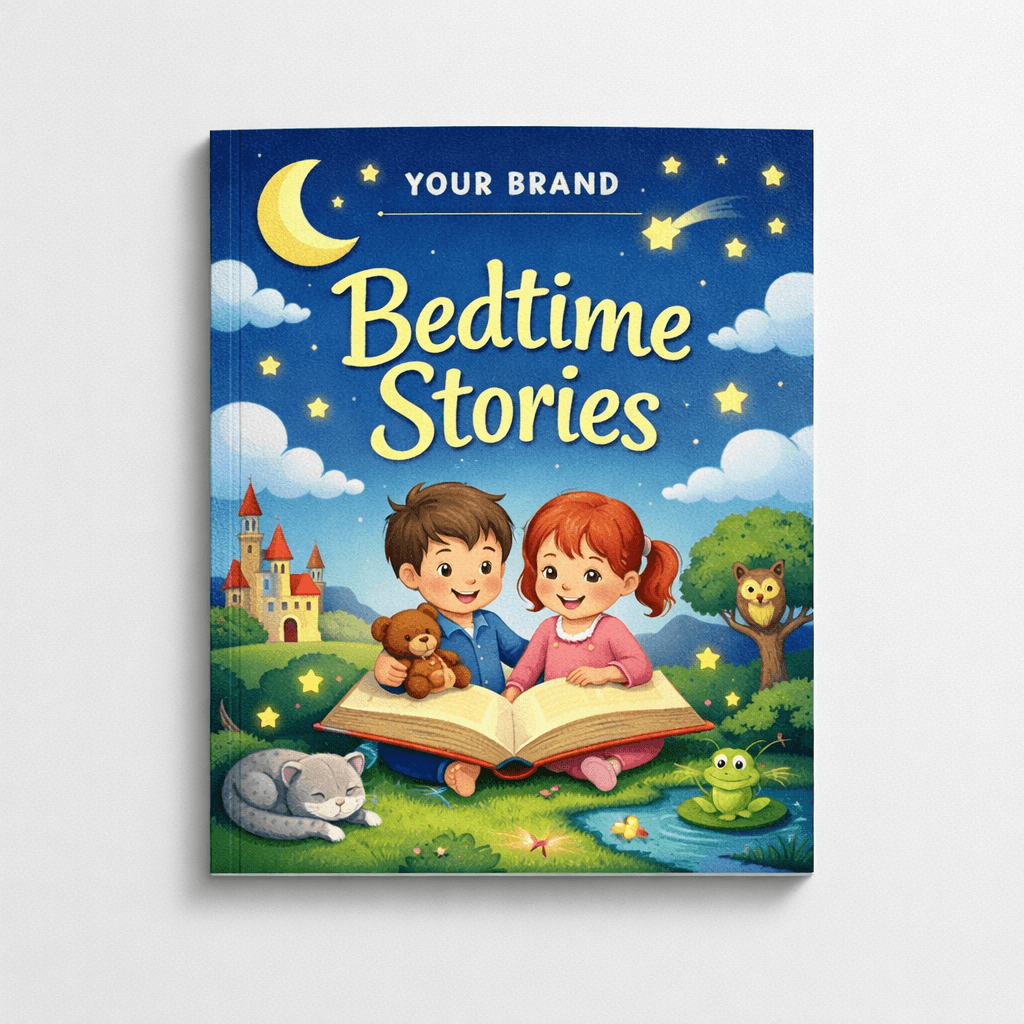
Product opportunity
Is children’s bedtime storybook (illustrated softcover) a good private-label product?
A custom illustrated children's bedtime storybook is both a creative work and a manufactured product. Successful sourcing begins before a printer receives the files: the brand should own or properly license the text, illustrations, fonts and characters; identify the reader age band; freeze the page size and count; and prepare print-ready artwork with controlled colour and bleed. The manufacturing brief then defines paper, ink, surface finish, binding, edge quality, page order and packaging. A low quoted unit price is not useful if colour shifts obscure illustrations, text becomes difficult to read, pages detach, the cover curls or the finished book reproduces material the buyer has no right to use.
The commercial case
Illustrated storybooks suit publishers, schools, education brands, bookstores, family retailers, faith organisations, NGOs and corporate gifting programmes. Bedtime themes can support parent-child routines, while original local stories and culturally considered characters can give a title lasting relevance beyond generic catalogue books. Commercial planning should account for editing, illustration, layout, proofing, print quantity, freight, storage and distribution—not printing alone. A book can also anchor a series or learning collection, but each title needs disciplined version control. Buyers should validate demand with a finished dummy or short proof stage before committing to a large print run, especially when page count, format or artwork is new.
Market fit
Demand, buyers, and the brand angle
Parents and educators assess story quality, age appropriateness, readability, illustration appeal, durability and value. For Nigeria-first brands, familiar settings, names and experiences may strengthen relevance when developed authentically rather than added superficially. Define whether the title is for read-aloud use, early independent readers or a broader family audience because this affects word count, type size, sentence complexity and illustration balance. Avoid copying popular characters, storylines, cover styles or unlicensed artwork. Product labelling and safety requirements can vary by market, particularly where a book includes add-ons, sound modules, stickers or other components; confirm the applicable requirements for the exact finished item.
What drives demand
- Parents and caregivers use illustrated stories for shared reading and bedtime routines.
- Schools, libraries and literacy programmes require age-appropriate reading materials.
- Original local stories can address underrepresented settings, names and everyday experiences.
- Books work as standalone retail items, series, educational bundles and meaningful gifts.
Likely customer groups
- Children's publishers, authors and education brands
- Schools, libraries, literacy NGOs and learning centres
- Bookstores, family retailers and ecommerce businesses
- Corporate, faith-based and community gifting programmes
Recommended white-label angle
The strongest white label route is an original branded publication, not a generic book with a new logo. Control the manuscript, editorial review, illustration rights, ISBN strategy where relevant, imprint details and source files. Build a design system for the cover, title page, typography and series identifiers so future books can look related without repeating content. The printer can provide paper, finishing and binding options, but the brand should approve a physical proof that represents the intended process. If using a licensed or supplier-owned title, obtain written rights covering territories, languages, quantities, sales channels and modification rather than relying on verbal permission.
Build the brief
Specifications to settle before requesting quotes
Send every shortlisted supplier the same written brief. That makes quotations comparable and reduces substitutions after sample approval.
- Reader and edition
- Define intended age band, language, edition, territory, read-aloud or independent-reading use and any curriculum or sensitivity review.
- Finished format
- Control trim width and height, orientation, page count including covers, spine allowance, corner profile and finished-book tolerance.
- Text and typography
- Freeze edited copy, typefaces, minimum readable type size, line spacing, contrast and text placement against illustrations.
- Interior paper
- Specify paper type, basis weight, opacity, whiteness or shade, grain direction and responsible-sourcing claims only where documented.
- Cover construction
- Define cover stock, lamination or coating, scoring, spine treatment and resistance to curling, scuffing and cracking.
- Colour reproduction
- Provide controlled colour profiles and references, and agree whether approval uses calibrated digital proof, wet proof or press sheet.
- Binding
- Choose saddle stitching, sewn or adhesive binding appropriate to page count and paper, with measurable page-pull and opening expectations.
- Artwork and identification
- Include bleed, safe zones, page sequence, barcode where required, ISBN or internal code, imprint, origin and edition information.
Customization ideas
- Original Nigeria-centred bedtime story with commissioned illustrations
- Bilingual edition using separately proofread and typeset language versions
- Named series with consistent cover architecture and colour coding
- Gift edition with a dedication page or responsibly documented premium paper
Possible market positions
- 1. Original locally relevant bedtime story for shared family reading
- 2. Read-aloud softcover series with consistent age and reading guidance
- 3. Bilingual illustrated story developed with qualified language review
- 4. Giftable storybook edition for schools, organisations and family events
Supplier due diligence
Ask better questions. Inspect the answers.
Questions for potential suppliers
- 1Which printing and binding facility will produce the book, and which operations are subcontracted?
- 2What preflight checks will be performed on page size, bleed, fonts, images, colour space and page sequence?
- 3Which exact interior and cover papers, inks, coatings, adhesive or thread are proposed, and how are substitutions controlled?
- 4Can you produce a bound physical proof using representative paper, colour, finish and binding before the main run?
- 5What objective tolerances apply to trim, registration, colour variation, page sequence, binding strength and cosmetic defects?
- 6How will files, plates, overruns, rejected copies and intellectual property be secured and disposed of?
- 7Can cartons remain identifiable by title, edition, batch and quantity throughout production and shipment?
Quality-control checklist
- Verify final file checksum, edition, page count and printer proof against the formally approved artwork package.
- Check every page for sequence, missing or duplicated content, legibility, image resolution, registration and unintended marks.
- Compare representative colour and paper shade with the approved proof under consistent viewing conditions.
- Measure trim, margins, spine alignment, cover scoring and squareness across copies from different cartons.
- Test binding integrity and page retention using a method appropriate to the selected construction and intended handling.
- Inspect for sharp wire ends where staples are used, rough edges, adhesive squeeze-out, strong odour, blocked pages, curl and surface damage.
- Verify title, author and illustrator credits, imprint, rights statement, edition, barcode, ISBN where used, origin and carton labels.
Protect the order
Risks to resolve before production
Copyright or licensing infringement
Do not print supplier-found images, fonts, characters or stories without documented rights covering the intended use and markets.
Colour mismatch
Screens and uncontrolled digital samples are unreliable references. Use managed files and an agreed proofing method tied to production.
Weak binding or page loss
Paper grain, page count, adhesive, stitching and curing affect durability. Specify the construction and test representative finished books.
Edition mix-up
Late copy changes and similar files can create incorrect runs. Use version names, checksums, written approvals and line clearance.
Unsafe add-on components
Stickers, toys, sound modules or loose accessories can change the product assessment. Review them separately before including them.
Shipping and landed-cost planning
Books are dense and vulnerable to moisture, crushed corners, cover scuffing and carton failure. Request finished unit weight, retail-pack dimensions, books per inner and master carton, carton dimensions, gross weight and stacking limits. Use cartons sized to prevent movement without compressing spines or curling covers, with moisture protection appropriate to the route and storage conditions. Pallet patterns should respect carton strength and book orientation. Inspect samples after representative handling for corner dents, rub marks, delamination, staple or binding damage and moisture distortion. Keep titles and editions separated, and print carton labels that identify edition, batch, quantity and destination to prevent mixed inventory.
Product sourcing FAQ
Questions founders ask before sourcing
Open any question to read the answer.
Can a children's storybook be private labelled?
Yes, but an original or properly licensed publication is stronger than simply adding a logo. Control content rights, edition files, printing specifications and imprint information.
Who owns illustrations made for the book?
Ownership depends on the written agreement with the illustrator or rights holder. Define copyright, permitted uses, territories, source-file delivery and attribution before production.
Should buyers approve a physical proof?
Yes. A bound proof helps assess size, paper, readability, colour, page sequence, cover finish and binding. Record any differences expected between proof and production.
Which binding is best for a softcover children's book?
It depends on page count, paper and intended use. Ask the printer to propose a construction, then specify and test its page retention, opening and finish.
Can a printer supply a generic popular-character book?
Do not proceed without verifiable licensing. Familiar characters, images and stories are protected intellectual property even when a supplier has sample files.
What should be inspected before shipment?
Check edition and page sequence, text and images, colour, trim, binding, cover finish, rights and imprint details, carton protection and batch identification.