Product opportunity
Is electric salt & pepper grinder set a good private-label product?
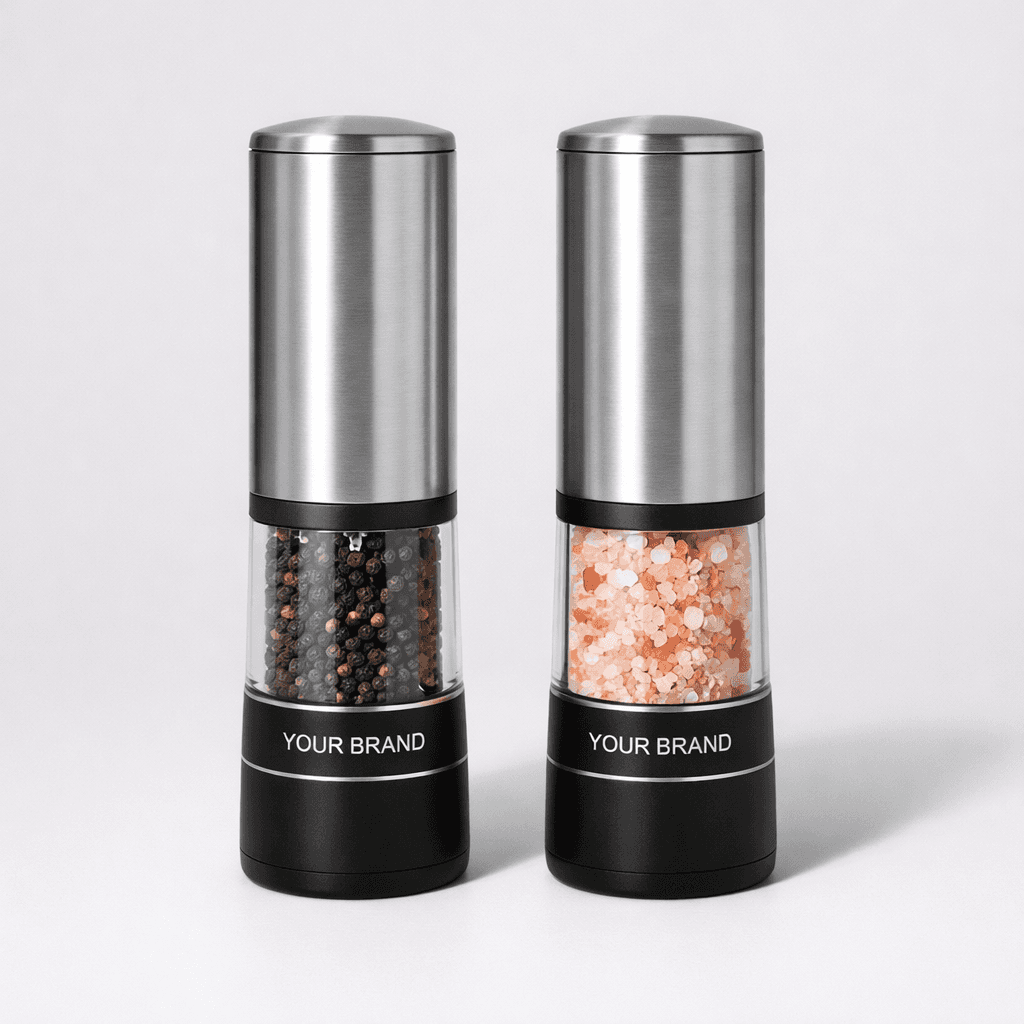
Electric Salt and Pepper Grinder Set can become a credible private-label offer when the product is defined around a real customer use rather than selected from a supplier photograph. Electric mills combine table presentation with one-handed seasoning, but a credible set must grind consistently, adjust predictably and resist corrosion, jamming, accidental activation and seasoning leakage. Buyers should translate that opportunity into a written specification covering grinding mechanism, coarseness adjustment, motor and torque, activation system, packaging and batch consistency. Quotations should only be compared after suppliers confirm the same construction, test methods and branding scope, because a lower price may reflect a materially different product.
The commercial case
This is a giftable kitchen accessory for households, kitchenware stores, restaurants and corporate hampers, with premium value created through matched construction, dependable mechanisms and presentation packaging. The strongest proposition gives the buyer a clear reason to choose this version and gives the brand enough control to reproduce the same experience on repeat orders. Commercial planning should include the intended sales channel, pack configuration, warranty or complaints policy, inspection cost and realistic landed-cost assumptions. A pre-production sample, approved artwork and measurable acceptance criteria are more valuable than broad claims such as “premium quality.”
Market fit
Demand, buyers, and the brand angle
Buyers notice grinding speed, noise, coarseness range, refill convenience, hand feel and mess after use. Gravity-activated, push-button and rechargeable formats serve different price positions and usage preferences. Entry, mid-range and premium offers should be separated through measurable differences in grinding mechanism, coarseness adjustment, motor and torque, activation system, power system rather than through packaging language alone. Before committing to inventory, test the proposed product and price with the intended customer segment, compare competing pack sizes and identify the complaints that appear repeatedly in the category. Those findings should shape the supplier brief and the claims used on the final listing.
What drives demand
- Home cooks value convenient, repeatable seasoning during preparation and dining.
- Matched grinder pairs are suitable for gifts and premium kitchen bundles.
- Restaurants and hospitality buyers can use consistent table accessories across locations.
- Demonstrable one-handed operation supports video-led ecommerce marketing.
Likely customer groups
- Urban households and home cooks
- Kitchenware and home-lifestyle retailers
- Restaurants, short lets and hospitality operators
- Gift-box, wedding and corporate-hamper businesses
Recommended white-label angle
Choose one clear promise—effortless one-handed use, dining-table presentation or rechargeable convenience—and engineer the mechanism, controls, materials and packaging around that position instead of relying on a metallic appearance. Practical customization options include Laser-marked logo on a controlled metal or coated finish; Matched salt and pepper identifiers or subtle colour accents; Rechargeable set with shared charging base or cable; Rigid presentation box with instructions and cleaning brush. Keep the brand promise tied to features that can be inspected and repeated. Approve physical colour references, logo placement, packaging artwork, instructions and barcode data together with the product sample, then prohibit material or component substitutions without written approval. This creates a defensible range instead of a generic item carrying a new logo.
Build the brief
Specifications to settle before requesting quotes
Send every shortlisted supplier the same written brief. That makes quotations comparable and reduces substitutions after sample approval.
- Grinding mechanism
- Define ceramic or metal burr construction, geometry, corrosion resistance, service life and permitted seasoning types.
- Coarseness adjustment
- Specify adjustment direction, useful range, repeatability and whether settings move during operation.
- Motor and torque
- Set performance expectations using defined salt and pepper samples, including jam recovery and operating noise.
- Activation system
- Choose push button, gravity sensor or another control and test false activation, delay and one-handed usability.
- Power system
- Define battery type and count or rechargeable cell, connector, charge indication, protection and included accessories.
- Chamber capacity
- Approve usable fill volume, opening size, visibility, seal, residue control and ease of refilling.
- Body materials
- Specify external finish, food-area materials, grip, corrosion resistance, fingerprints, joints and drop expectations.
- Pair matching and pack
- Control colour and finish consistency, salt/pepper identification, inserts, instructions and gift-box protection.
Customization ideas
- Laser-marked logo on a controlled metal or coated finish
- Matched salt and pepper identifiers or subtle colour accents
- Rechargeable set with shared charging base or cable
- Rigid presentation box with instructions and cleaning brush
Possible market positions
- 1. One-handed seasoning for active home cooks
- 2. A coordinated dining-table upgrade
- 3. Rechargeable premium grinder pair with presentation base
- 4. Gift-ready kitchen accessory for weddings and hampers
Supplier due diligence
Ask better questions. Inspect the answers.
Questions for potential suppliers
- 1How do you define, measure and control grinding mechanism for this exact model, and what evidence can you provide from production batches?
- 2How do you define, measure and control coarseness adjustment for this exact model, and what evidence can you provide from production batches?
- 3How do you define, measure and control motor and torque for this exact model, and what evidence can you provide from production batches?
- 4How do you define, measure and control activation system for this exact model, and what evidence can you provide from production batches?
- 5How do you define, measure and control power system for this exact model, and what evidence can you provide from production batches?
- 6How do you define, measure and control chamber capacity for this exact model, and what evidence can you provide from production batches?
Quality-control checklist
- Inspect and test grinding mechanism against the approved sample, written tolerance and agreed acceptance method on units selected across the batch.
- Inspect and test coarseness adjustment against the approved sample, written tolerance and agreed acceptance method on units selected across the batch.
- Inspect and test motor and torque against the approved sample, written tolerance and agreed acceptance method on units selected across the batch.
- Inspect and test activation system against the approved sample, written tolerance and agreed acceptance method on units selected across the batch.
- Inspect and test power system against the approved sample, written tolerance and agreed acceptance method on units selected across the batch.
- Inspect and test chamber capacity against the approved sample, written tolerance and agreed acceptance method on units selected across the batch.
Protect the order
Risks to resolve before production
Weak grinding performance
Low torque or unsuitable burr geometry leads to slow output, jams and inconsistent particle size.
Corrosion and contamination
Salt can attack unsuitable metal components, finishes and contacts in humid storage or use.
Unreliable activation
Poor sensors or buttons can trigger accidentally, respond slowly or fail after repeated operation.
Battery-related complaints
High consumption, inaccessible cells or poorly controlled rechargeable electronics reduce convenience and increase returns.
Shipping and landed-cost planning
Grinders combine motors, mechanisms and sometimes batteries with brittle transparent chambers. Immobilise the pair inside the retail pack, protect adjustment knobs and windows, and confirm the shipping route for any included lithium cell before production. Obtain the final individual pack size, master-carton dimensions, units per carton, gross weight and stacking arrangement from a production-equivalent branded sample before confirming freight. Packaging should protect the product through compression, vibration, moisture and handling appropriate to the route. Recheck carton markings, batch traceability, quantities and product condition before release, and calculate landed cost from the approved packed configuration rather than an early supplier estimate.
Product sourcing FAQ
Questions founders ask before sourcing
Open any question to read the answer.
Can electric salt and pepper grinder set be private labelled?
Yes. The product can be differentiated through controlled colours, construction, branding and packaging. Approve the complete branded sample and record the specification before mass production rather than treating logo application as the only private-label decision.
What specifications matter when sourcing electric salt and pepper grinder set?
The core specification should cover grinding mechanism, coarseness adjustment, motor and torque, activation system, power system, chamber capacity, plus branding, pack configuration, tolerances, inspection method and batch traceability. The exact priorities should follow the intended customer and use case.
How should suppliers for electric salt and pepper grinder set be compared?
Send every shortlisted supplier the same written brief and ask for a production-equivalent sample. Compare confirmed construction, test evidence, quality controls, packaging capability, change-control process and response to defects—not the headline quotation alone.
What should be checked before approving a production sample?
Check dimensions, materials, functional performance, workmanship, colour, odour where relevant, logo durability, packaging, instructions and the claims printed on the pack. Retain the signed sample as the inspection reference.
What are the main sourcing risks for electric salt and pepper grinder set?
Important risks include weak grinding performance, corrosion and contamination, unreliable activation, battery-related complaints. Convert each risk into a specification, supplier question or inspection checkpoint before the purchase order is placed.
How should electric salt and pepper grinder set be prepared for shipping?
Grinders combine motors, mechanisms and sometimes batteries with brittle transparent chambers. Immobilise the pair inside the retail pack, protect adjustment knobs and windows, and confirm the shipping route for any included lithium cell before production. Confirm the final packed dimensions and test the shipping configuration before using it for freight and landed-cost calculations.