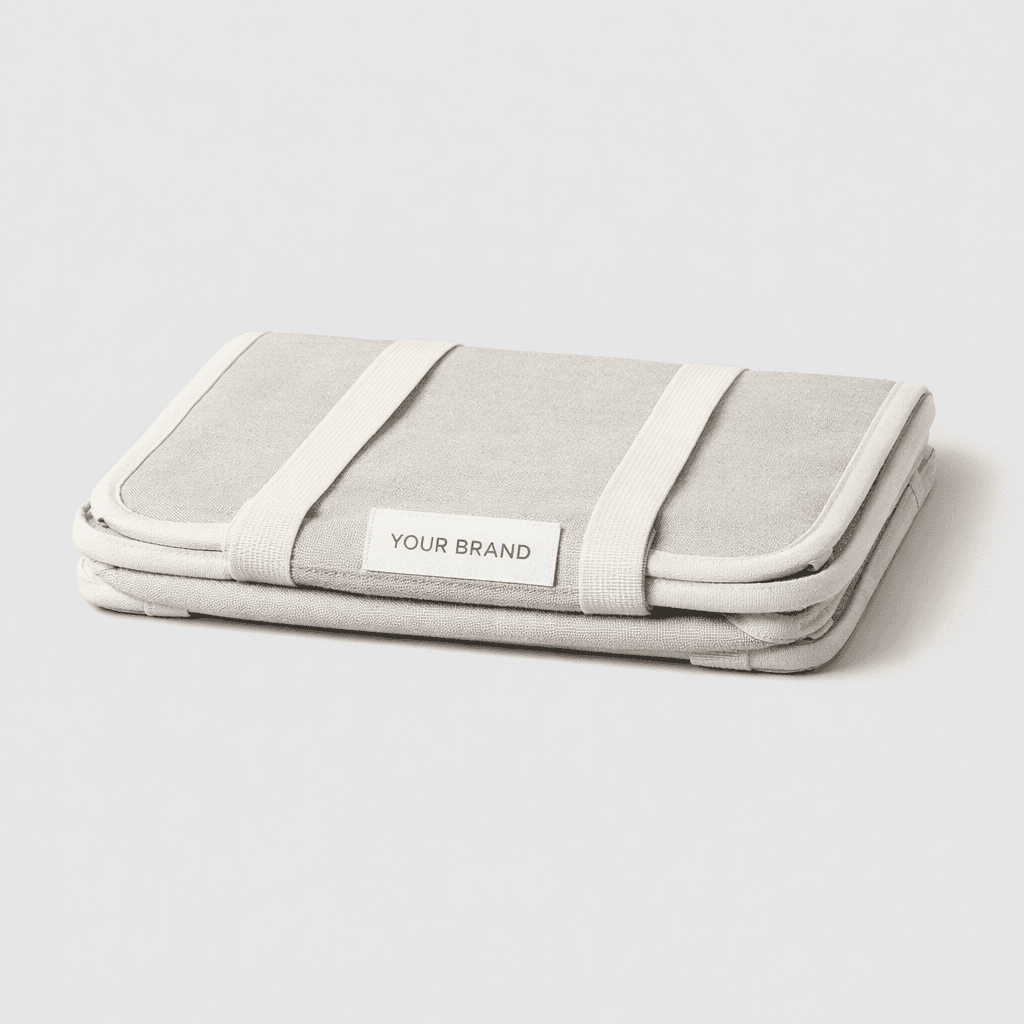
Product opportunity
Is foldable laundry basket a good private-label product?
A foldable laundry basket solves a familiar storage problem: customers need useful capacity when the hamper is open but minimal space when it is not in use. It can fit home-organisation, dormitory, family, hospitality and cleaning-service ranges. The buyer must define capacity, dimensions, fabric, internal support, base construction, handle strength, moisture behaviour and folding method because products that look nearly identical online can perform very differently under a wet or heavy laundry load.
The commercial case
Foldable hampers offer a broad household audience and strong visual branding area. They can be sold as individual room organisers, paired sets for sorting clothes, or coordinated with storage boxes and garment bags. Commercial success depends on balancing structure and collapsibility: the basket should stand neatly when loaded, fold without permanent damage and survive repeated carrying at the handles.
Market fit
Demand, buyers, and the brand angle
Budget products compete on capacity and print, but may collapse, tear or develop odour. Mid-range versions improve fabric weight, coating, frame, base and handle reinforcement. Premium products can use structured panels, removable liners, lids, divided compartments or coordinated neutral colourways. Capacity claims should be supported by dimensions, since litre figures alone are difficult for customers to visualise.
What drives demand
- Smaller homes, shared accommodation and dormitories reward products that fold away when unused.
- Laundry is a recurring household task with demand across age and income groups.
- Home-organisation content and gifting create opportunities beyond replacement purchases.
- Large fabric panels allow visible branding, patterns and coordinated product collections.
Likely customer groups
- Urban households, students and shared-accommodation residents
- Home-organisation and household-goods shoppers
- Hotels, laundries, cleaning services and short-let operators
- Gift, nursery and coordinated-interiors brands
Recommended white-label angle
Build a calm, coordinated home-organisation collection. Use neutral or distinctive brand colours, a woven patch or large printable panel, and clear icons showing capacity, fold-flat storage and care instructions. Two-section sorting versions and matching storage organisers can increase average order value without moving far from the same customer need.
Build the brief
Specifications to settle before requesting quotes
Send every shortlisted supplier the same written brief. That makes quotations comparable and reduces substitutions after sample approval.
- Capacity and dimensions
- State open dimensions, usable volume, opening size and folded dimensions with tolerances.
- Outer fabric
- Define textile type, weight or denier, colour, coating, hand feel, abrasion and care expectations.
- Frame or support
- Specify steel wire, rods, board, springs or freestanding fabric construction and how supports are retained.
- Base
- Define board, reinforced fabric or removable insert and the flatness required under load.
- Handles
- Set material, dimensions, stitching pattern, reinforcement and minimum loaded carry test.
- Moisture behaviour
- Clarify water resistance, breathability, lining, drying instructions and whether wet garments are an intended use.
- Folding mechanism
- Approve the exact fold sequence and test repeated folding for frame damage, creasing and loss of shape.
- Branding and packing
- Define print or label method, care label, packaging, insert, carton compression and recovery after unpacking.
Customization ideas
- Screen-printed artwork, woven patch, embroidery or leather-look brand tab
- Single, double or triple compartments for laundry sorting
- Lid, removable washable liner, side pocket or reinforced shoulder handles
- Matching colour range with storage boxes, under-bed bags and garment organisers
Possible market positions
- 1. Fold-flat laundry storage for apartments and student rooms
- 2. A two-section lights-and-darks sorting hamper
- 3. A coordinated neutral home-organisation collection
- 4. A reinforced commercial basket for short lets, cleaners and laundry services
Supplier due diligence
Ask better questions. Inspect the answers.
Questions for potential suppliers
- 1What are the open and folded dimensions, usable capacity and finished unit weight?
- 2Which fabric, coating, frame and base materials are used in the quoted construction?
- 3What load can the handles and base carry, and how is that tested on finished baskets?
- 4How many folding cycles can the frame complete before distortion or breakage?
- 5How should the basket be cleaned and dried, and what moisture or odour testing is performed?
- 6How will the factory pack the baskets without creating permanent creases or frame deformation?
Quality-control checklist
- Measure open dimensions, folded size, weight and capacity against the approved sample.
- Inspect fabric, coating, frame retention, base, seams, binding and all raw edges.
- Load the basket to the agreed weight and carry it repeatedly by each handle.
- Fold and reopen sampled units repeatedly, checking recovery, frame alignment and standing stability.
- Check colour, print or label alignment, rub resistance, odour and visible shade variation.
- Inspect recovery after production packing and verify care labels, inserts and carton quantities.
Protect the order
Risks to resolve before production
Weak handles
Large hampers invite heavy loads. Handles need reinforcement and finished-product load testing, not just strong-looking webbing.
Poor standing stability
Thin fabric, weak frames or underspecified bases can cause the basket to collapse when partly filled.
Permanent packing creases
Aggressive compression can reduce freight volume but leave the product misshapen on arrival.
Moisture and odour
Coatings and enclosed liners may trap moisture or carry a strong factory odour unless materials and drying guidance are appropriate.
Shipping and landed-cost planning
The folding design can reduce freight volume substantially, but the packing method must be validated on actual production materials. Ask for the final folded unit, inner pack and master-carton dimensions, plus photographs after a packed sample has remained compressed. Balance carton efficiency with recovery, because distorted frames and deep fabric creases can make a saleable product look defective.
Product sourcing FAQ
Questions founders ask before sourcing
Open any question to read the answer.
Can foldable laundry baskets be made with a custom logo?
Yes. Common options include screen printing, embroidery, woven patches and branded tabs. Large fabric panels also support custom patterns and coordinated colours.
What materials are used for collapsible laundry hampers?
Common constructions combine polyester, Oxford fabric, cotton blends or non-woven material with wire, rods, board or spring supports. The right combination depends on load, structure, price and care needs.
How should laundry-basket capacity be specified?
Use open length, width and height together with usable volume. Also define opening size, folded dimensions and the load the base and handles must support.
How do I prevent a foldable hamper from collapsing?
Specify the frame, wall construction and base stiffness, approve a loaded sample, and inspect standing stability when empty, partly filled and fully loaded.
Are fabric laundry baskets suitable for wet clothes?
Only if the chosen materials, lining, ventilation and care guidance support that use. Do not market general fabric storage as suitable for wet laundry without testing moisture and drying behaviour.
What quality tests matter for a collapsible laundry basket?
Check dimensions, standing stability, handle and base load, repeated carry, folding cycles, seam strength, frame retention, odour, colour, print durability and recovery after packing.