Product opportunity
Is hydrating facial mist a good private-label product?
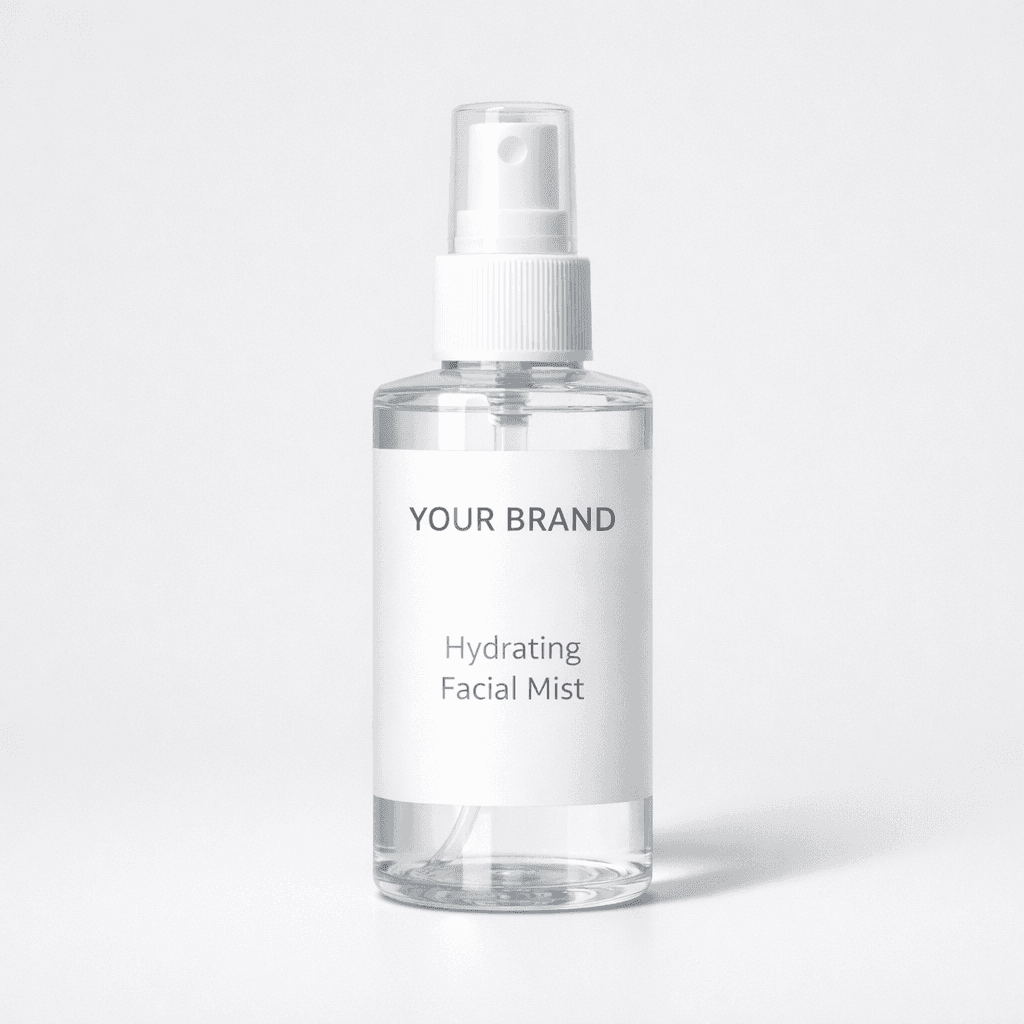
A private label hydrating facial mist combines a water-based cosmetic formula with a dispensing system that must produce a consistent, comfortable spray. The product should not be sourced by choosing a fragrance and bottle from a catalogue alone. Formula composition, intended skin feel, preservative strategy, fill volume, bottle and pump compatibility, droplet pattern, leakage resistance and destination-market labelling all affect whether the finished product remains usable and credible. Buyers should define the intended routine—such as a refreshing mist used during the day or a skincare step used after cleansing—then require production-equivalent samples and evidence appropriate to the final formula and pack.
The commercial case
Facial mists can fit beauty retailers, skincare brands, spas, travel-size ranges, gift sets and online self-care businesses. They are easy to demonstrate and can encourage repeat purchase when the spray experience, scent and skin feel are consistent. The commercial risk is that an attractive bottle can conceal a weak product: pumps may spit rather than mist, formulas may feel sticky, fragrance may be overpowering, and packaging components may change after prolonged contact with the contents. A defensible brand proposition comes from a clearly defined formula brief, honest cosmetic claims, controlled batch manufacture and packaging that continues to spray and seal throughout the stated shelf life.
Market fit
Demand, buyers, and the brand angle
Warm weather, air-conditioned environments, travel and layered skincare routines can support interest in portable facial refreshment, but buyers have different preferences around fragrance, alcohol, finish and ingredient simplicity. Segment the offer by use case rather than vague luxury language: a compact bag-friendly mist, a fragrance-free sensitive-positioned option subject to substantiation, or a larger at-home skincare mist. Avoid presenting hydration, soothing or brightening statements as medical treatment claims. For Nigeria, confirm current cosmetic registration, label and advertising requirements with the responsible authority before manufacture or import, and ensure the final artwork matches the registered product details where registration applies.
What drives demand
- Portable skincare formats suit commuters, travellers and consumers who refresh their routine away from home.
- A fine, even spray creates an immediate product demonstration for beauty retail and social content.
- Facial mists bundle naturally with cleansers, serums, moisturisers and self-care gift sets.
- Repeat use can support replenishment when formula feel, scent and pump performance remain consistent.
Likely customer groups
- Independent skincare and beauty brands
- Beauty retailers, pharmacies and online stores
- Spas, salons, hotels and travel-amenity suppliers
- Gift-box and corporate wellness businesses
Recommended white-label angle
A strong white-label direction joins formula, spray experience and visual identity. Brands can choose a restrained ingredient story, a recognisable bottle colour, a fine-mist pump, tamper evidence and clear directions that explain when and how to use the product. The bottle and carton should make the net content, ingredient list, batch traceability, responsible parties and required warnings easy to find. Premium positioning may come from better dispensing, thoughtful fragrance development or verified stability rather than an elaborate list of fashionable ingredients. Freeze the exact formula and component set before approving claims or artwork because changing a preservative, fragrance, pump gasket or bottle resin can change performance.
Build the brief
Specifications to settle before requesting quotes
Send every shortlisted supplier the same written brief. That makes quotations comparable and reduces substitutions after sample approval.
- Formula brief
- Define intended use, skin feel, appearance, fragrance position and prohibited ingredients without copying an ingredient trend into an untested base.
- Full composition
- Require the final ingredient list, ingredient functions and formula version; prohibit unapproved substitutions after sample and artwork approval.
- Preservation and stability
- Request testing appropriate to the water-based formula, packaging and intended shelf life, including microbiological and stability evaluation by qualified parties.
- Spray performance
- Specify a fine, even pattern, acceptable actuation force, output per stroke and limits for spitting, dripping, clogging or inconsistent priming.
- Primary packaging
- Record bottle material, colour, fill volume, neck finish, pump model, dip-tube length, gasket and cap so the complete component set is controlled.
- Pack compatibility
- Evaluate formula contact with the bottle, pump, gasket, print and label under expected storage conditions before committing to production.
- Leak and transport resistance
- Define closure torque or fit, tamper evidence and leakage tests in upright, inverted and transport-stressed positions.
- Label and traceability
- Approve the ingredient declaration, net content, directions, warnings, batch coding, dates, origin and responsible-party information required for the destination market.
Customization ideas
- Pantone-matched bottle or label with a controlled fine-mist pump
- Fragrance-free or lightly fragranced variants developed as separate approved formulas
- Travel-size and full-size packs with consistent visual identity
- Skincare set pairing the mist with a complementary cleanser or moisturiser
Possible market positions
- 1. Fine-mist daily refresher for warm-weather and commuter routines
- 2. Minimal, fragrance-free positioned mist with carefully reviewed claims
- 3. Travel skincare duo combining a mist with a complementary moisturiser
- 4. Spa or hospitality facial-refreshment line with restrained co-branding
Supplier due diligence
Ask better questions. Inspect the answers.
Questions for potential suppliers
- 1Is the offered formula a stock base or a custom development, and who owns the final formula documentation?
- 2Which stability, microbiological and packaging-compatibility evaluations have been completed on this exact formula and component set?
- 3What pump model, output and spray-pattern standard will be used, and can replacement components be substituted without approval?
- 4How are raw materials, bulk batches, filling hygiene and finished-product batch records controlled?
- 5Can you provide production-equivalent samples with the final fragrance, bottle, pump, label and tamper feature?
- 6Which documents and samples can you support for destination-market cosmetic registration and compliant artwork review?
Quality-control checklist
- Compare appearance, odour, skin feel and spray experience with the retained approved sample without making a clinical efficacy judgment.
- Check fill volume or mass, bottle cleanliness, cap fit, pump priming, actuation and spray consistency across sampled cartons.
- Inspect for leakage, clogged pumps, drips, distorted bottles, loose labels, damaged print and missing tamper evidence.
- Verify the production formula code, batch records and agreed finished-product testing documents against the purchase specification.
- Confirm ingredient list, directions, warnings, net content, batch code, dates and required responsible-party details on every packaging layer.
- Run agreed transport and storage checks on filled production packs and examine formula colour, odour, separation and component changes.
Protect the order
Risks to resolve before production
Formula substitution
A supplier may change fragrance, preservative or supporting ingredients after sampling. Freeze a formula version and require written approval for every change.
Pump incompatibility
A pump that works initially can leak, clog or lose spray quality after formula contact. Test the exact filled pack, not an empty component.
Unsupported cosmetic claims
Hydration and soothing language must remain accurate and appropriately substantiated; avoid treatment, cure or guaranteed-result claims.
Registration or label mismatch
Cosmetic requirements depend on the destination market. For Nigeria, complete the applicable NAFDAC process and artwork review before commercial import or sale.
Shipping and landed-cost planning
Filled facial-mist bottles add liquid weight and can leak when pumps, closures or seals are poorly matched. Obtain the final unit dimensions, filled weight, units per carton, carton measurements, gross weight and orientation before confirming freight assumptions. Use dividers or fitted trays where bottles can rub, and protect labels and printed finishes from moisture. Conduct leakage and packaging tests on production-equivalent filled units after vibration, drop and temperature exposure appropriate to the route. Keep batch documents and any destination-market clearance records aligned with the quantities and product identity being shipped.
Product sourcing FAQ
Questions founders ask before sourcing
Open any question to read the answer.
Can a facial mist be made as a private label product?
Yes. A buyer can customise the formula, fragrance position, bottle, pump, label and carton, but the final formula and packaging combination should be evaluated and documented before production.
What makes a good facial-mist pump?
It should prime reliably and produce an even, fine pattern without spitting, dripping or excessive force. Test the pump with the actual formula over time because liquid properties affect performance.
What testing should be discussed for a water-based facial mist?
Ask qualified parties about microbiological quality, preservation, stability and packaging compatibility appropriate to the exact formula, intended shelf life and destination market.
Does a private label facial mist need NAFDAC registration in Nigeria?
Cosmetics are regulated in Nigeria. Confirm the current product-registration, import, labelling and advertising route directly with NAFDAC or a qualified regulatory adviser before sale.
Can one approved formula be placed in any bottle?
Not safely by assumption. Bottle resin, colourants, pump components, gaskets, labels and print can interact with the formula, so the complete filled pack should be compatibility tested.
How can a buyer reduce facial-mist quality complaints?
Freeze the formula and components, retain an approved filled sample, inspect spray and leakage performance, verify batch documents and ensure the released artwork matches the actual product.