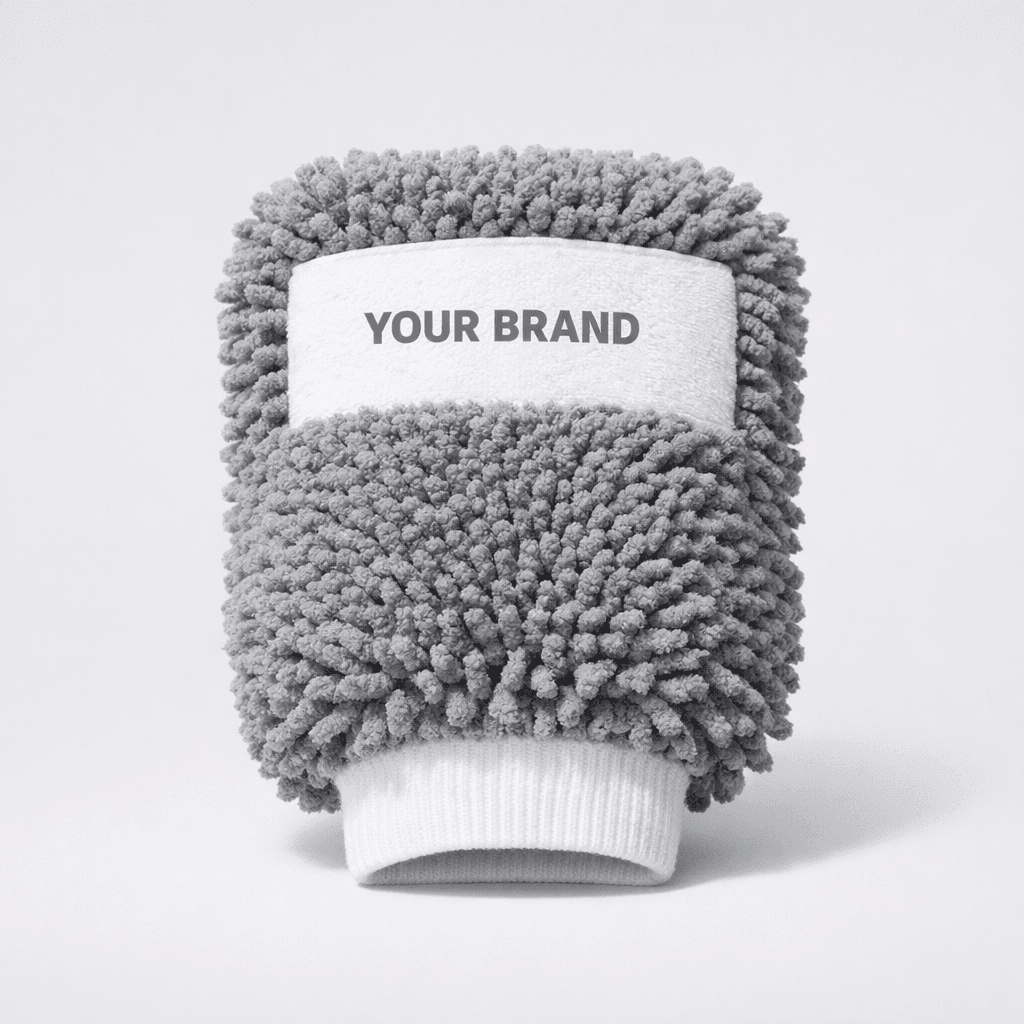
Product opportunity
Is microfiber car wash mitt a good private-label product?
Microfiber Car Wash Mitt should be sourced around a clear buying brief: clean rinsing, secure wet grip and gentle contact with paintwork. Specify the pile construction and backing as well as the visible soft face. A mitt may feel plush yet have abrasive seams or hold debris that is difficult to rinse away. Send suppliers the same intended use, dimensions, performance expectations and destination market so quotations describe comparable goods. Approve the complete branded sample before committing to production.
The commercial case
For an importer, the commercial question is whether microfiber car wash mitt can meet a defined customer need at a workable landed cost. Potential buyers include car-care shops, detailing studios, automotive accessory brands, vehicle wash suppliers. Detailing buyers value a mitt that stays on a wet hand and releases dirt during rinsing. Compare the finished saleable pack, not just the loose factory item: include packaging, inspection, freight, import charges and a realistic allowance for damaged or returned goods. Confirm the minimum order separately for stock goods, custom colours and custom packaging.
Market fit
Demand, buyers, and the brand angle
Detailing buyers value a mitt that stays on a wet hand and releases dirt during rinsing. Trial the chosen fabric with typical washing products and inspect both the mitt and test surface. Avoid an absolute scratch-free promise because grit and washing technique also affect the result. Use samples and buyer feedback to choose the first specification; interest in a category does not guarantee sales for every size, colour or construction.
What drives demand
- A practical customer need: clean rinsing, secure wet grip and gentle contact with paintwork.
- An identifiable retail route through car-care shops and detailing studios.
- A clear assortment opportunity: colour-coded wash mitt paired with soft elastic cuff.
- Demonstrable differences in fibre construction and hand fit give buyers concrete features to compare.
Likely customer groups
- Car-care shops
- Detailing studios
- Automotive accessory brands
- Vehicle wash suppliers
Recommended white-label angle
Build the branded offer around clean rinsing, secure wet grip and gentle contact with paintwork. Options include colour-coded wash mitt; soft elastic cuff; internal finger divider; coordinated wash-and-dry kit. Ask which options use existing tooling and which require a new mould, material purchase or packaging run. The approval sample should combine final construction, artwork and instructions, with written change control for repeat orders.
Build the brief
Specifications to settle before requesting quotes
Send every shortlisted supplier the same written brief. That makes quotations comparable and reduces substitutions after sample approval.
- Fibre construction
- State fibre blend, pile type, face weight and backing fabric.
- Hand fit
- Define palm dimensions, opening size, cuff stretch and grip when fully wet.
- Seam finish
- Keep hard stitching and exposed edges away from the cleaning face.
- Rinsing and laundering
- Evaluate soil release, shedding, colourfastness and shape after the specified wash process.
- Saleable pack and assortment
- Define whether the quotation covers one item, a pair or a set; list included components, colour ratios, inner-pack counts and dimensional tolerances.
- Branding and instructions
- Approve the exact logo method on microfiber car wash mitt, artwork position, rub resistance, barcode and product-specific care instructions before the packaging run.
- Batch control
- Require production-lot identification, recorded material or component changes and a retained finished sample that can be compared with repeat deliveries.
Customization ideas
- Colour-coded wash mitt
- Soft elastic cuff
- Internal finger divider
- Coordinated wash-and-dry kit
Possible market positions
- 1. Lead with clean rinsing, secure wet grip and gentle contact with paintwork and show the feature in use.
- 2. Develop a focused pack for car-care shops before expanding the assortment.
- 3. Offer colour-coded wash mitt as a visible differentiator, supported by the approved sample.
- 4. Use instructions that explain fibre construction and rinsing and laundering in language the end customer understands.
Supplier due diligence
Ask better questions. Inspect the answers.
Questions for potential suppliers
- 1For fibre construction, what specification and test evidence can you provide? State fibre blend, pile type, face weight and backing fabric.
- 2For hand fit, what specification and test evidence can you provide? Define palm dimensions, opening size, cuff stretch and grip when fully wet.
- 3For seam finish, what specification and test evidence can you provide? Keep hard stitching and exposed edges away from the cleaning face.
- 4For rinsing and laundering, what specification and test evidence can you provide? Evaluate soil release, shedding, colourfastness and shape after the specified wash process.
- 5Which of these options can you make using existing tooling: colour-coded wash mitt or soft elastic cuff? Quote the minimum order and setup cost for each separately.
- 6Can you supply the final branded and packed microfiber car wash mitt for approval, retain a matching reference, and obtain written consent before changing its materials or construction?
Quality-control checklist
- Check fibre construction on production samples against the agreed method and acceptance limits. State fibre blend, pile type, face weight and backing fabric.
- Check hand fit on production samples against the agreed method and acceptance limits. Define palm dimensions, opening size, cuff stretch and grip when fully wet.
- Check seam finish on production samples against the agreed method and acceptance limits. Keep hard stitching and exposed edges away from the cleaning face.
- Check rinsing and laundering on production samples against the agreed method and acceptance limits. Evaluate soil release, shedding, colourfastness and shape after the specified wash process.
- Review retained grit and hard seam contact after the intended handling or use test, not only on an untouched display sample.
- Verify final logo, instructions, model or size labels, pack count and lot identification; inspect units from several cartons against the retained approved sample.
Protect the order
Risks to resolve before production
Retained grit
A deep pile can retain abrasive particles; test rinsing rather than relying on softness.
Hard seam contact
Stitching may touch paint when the mitt is compressed.
Wet slipping
Loose cuffs can make washing awkward and cause the mitt to fall.
Fabric shedding
Loose fibres can remain on paint or collect in seams.
Shipping and landed-cost planning
Pack clean dry mitts in protective bags, separated from abrasive accessories. Check pairs or single-item counts explicitly. After compression in cartons, inspect pile recovery, cuff shape and contamination before accepting the shipment. Obtain measured packed dimensions, carton quantities and gross weight before comparing air and sea freight. Include the agreed packing arrangement in the purchase specification and inspect it before dispatch.
Product sourcing FAQ
Questions founders ask before sourcing
Open any question to read the answer.
Can I market a mitt as scratch-free?
Avoid an unconditional claim. Material quality matters, but trapped grit, cleaning technique and the surface condition also affect scratching. Demonstrate appropriate washing and rinsing practices alongside the product.
What should I specify when importing microfiber car wash mitt?
Start with fibre construction, hand fit, seam finish, rinsing and laundering. Add the saleable pack, branding, intended customer and destination market. Ask suppliers to confirm each item in writing rather than substituting a stock catalogue description.
Can microfiber car wash mitt carry my own brand?
Ask about colour-coded wash mitt, soft elastic cuff, internal finger divider, coordinated wash-and-dry kit. Branding feasibility and order quantities depend on the construction and factory. Approve the actual finish and packaging together, including any setup charges.
How should I compare factory quotations?
Give each supplier the same microfiber car wash mitt specification. Separate unit price, tooling, artwork, packaging, sample charges and inspection. Confirm the named delivery term and what transport is included; a low factory price alone does not establish a better landed cost.
Which samples should I check before ordering?
Evaluate a functional sample against fibre construction and hand fit, then approve a final branded pre-production sample. Resolve retained grit before releasing the order and retain a reference for shipment inspection.
How do I start sourcing microfiber car wash mitt through LineScout?
Use the sourcing action on this product page and include your target quantity, destination, required specification and branding preferences. Ask for sample and freight options before confirming the production order.