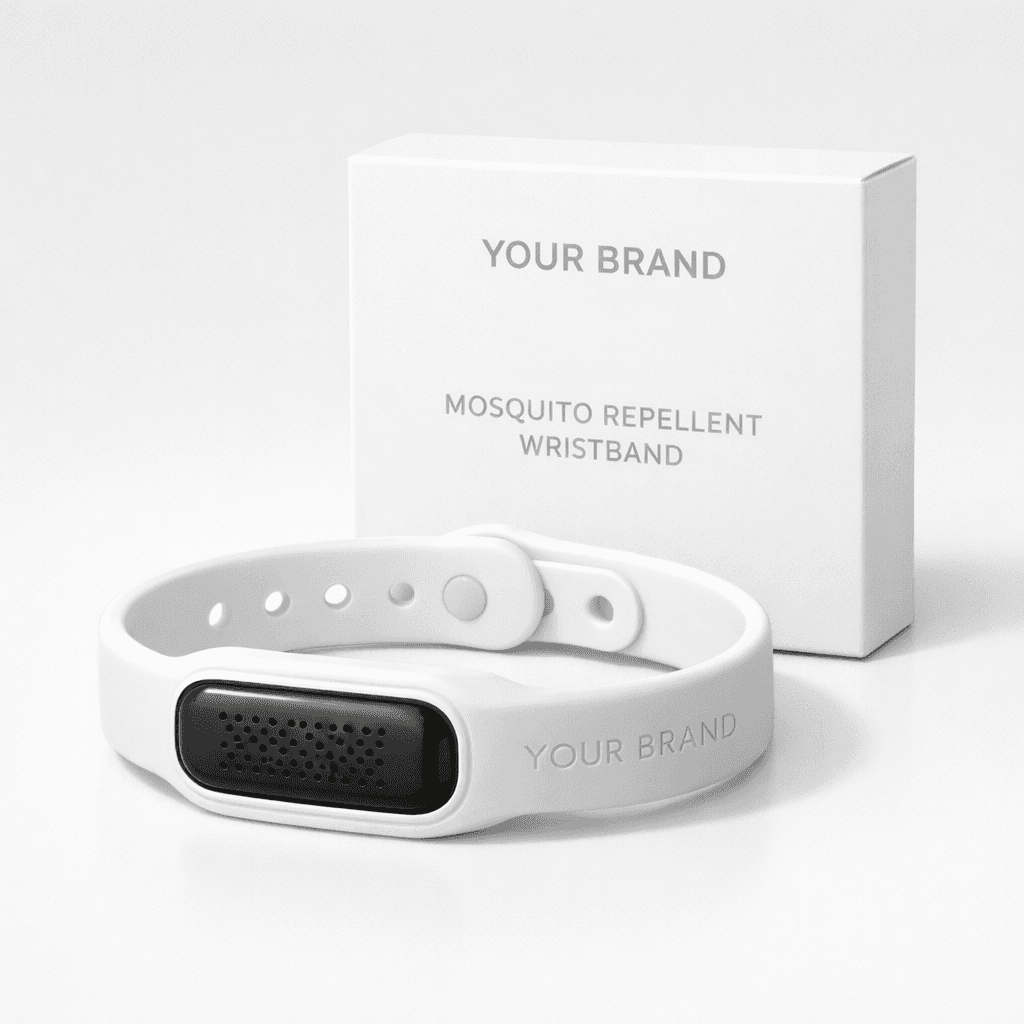
Product opportunity
Is portable mosquito repellent wristband a good private-label product?
Portable Mosquito Repellent Wristband can become a credible private-label offer when the product is defined around a real customer use rather than selected from a supplier photograph. Wearable repellent bands are portable and easy to merchandise for travel and outdoor use, but the commercial claim depends on the active formulation, release method, use conditions and evidence—not the presence of a scented oil. Buyers should translate that opportunity into a written specification covering active formulation, performance evidence, claimed duration, band material, packaging and batch consistency. Quotations should only be compared after suppliers confirm the same construction, test methods and branding scope, because a lower price may reflect a materially different product.
The commercial case
The format can interest pharmacies, travel stores, outdoor sellers, schools and family-focused retailers, yet responsible brands must validate whether the product can make the intended repellent claims in each destination before ordering or advertising. The strongest proposition gives the buyer a clear reason to choose this version and gives the brand enough control to reproduce the same experience on repeat orders. Commercial planning should include the intended sales channel, pack configuration, warranty or complaints policy, inspection cost and realistic landed-cost assumptions. A pre-production sample, approved artwork and measurable acceptance criteria are more valuable than broad claims such as “premium quality.”
Market fit
Demand, buyers, and the brand angle
Customers compare comfort, odour, adjustable fit, packaging and claimed duration, but perceived convenience should not be confused with reliable protection. Products should never encourage users to abandon other appropriate bite-prevention measures. Entry, mid-range and premium offers should be separated through measurable differences in active formulation, performance evidence, claimed duration, band material, fit and closure rather than through packaging language alone. Before committing to inventory, test the proposed product and price with the intended customer segment, compare competing pack sizes and identify the complaints that appear repeatedly in the category. Those findings should shape the supplier brief and the claims used on the final listing.
What drives demand
- Mosquito exposure creates demand for portable bite-prevention options.
- Travel, school and outdoor activities favour lightweight wearable formats.
- Individually sealed units suit retail counters, kits and family multipacks.
- Colours and adjustable formats can address children and adult segments when appropriately designed.
Likely customer groups
- Travel and outdoor-accessory retailers
- Pharmacies and family-care sellers
- Schools, camps and event-kit suppliers
- Hospitality, tourism and corporate-welfare programmes
Recommended white-label angle
Build the proposition around portability and transparent use instructions rather than absolute protection. Identify active substances accurately, define storage and replacement guidance, and obtain expert destination-market review of classification, claims, labels and evidence. Practical customization options include Adult and child-size adjustable bands with controlled colours; Individually sealed branded pouches for formulation retention; Travel multipack with transparent replacement guidance; Coordinated outdoor kit while keeping each product's claims separate. Keep the brand promise tied to features that can be inspected and repeated. Approve physical colour references, logo placement, packaging artwork, instructions and barcode data together with the product sample, then prohibit material or component substitutions without written approval. This creates a defensible range instead of a generic item carrying a new logo.
Build the brief
Specifications to settle before requesting quotes
Send every shortlisted supplier the same written brief. That makes quotations comparable and reduces substitutions after sample approval.
- Active formulation
- Identify every active and carrier substance, concentration, source, allergen concern and prohibited substitution.
- Performance evidence
- Define the exact repellent claim and require suitable testing for the finished band, formulation and intended conditions.
- Claimed duration
- Support duration through an agreed method and state storage, opening and replacement conditions clearly.
- Band material
- Specify polymer, dimensions, hardness, skin-contact considerations, colour, odour and resistance to sweat and tearing.
- Fit and closure
- Control adjustable range, retention, snag risk, ease of removal and suitability for the stated user group.
- Formulation retention
- Set limits for weight or active loss through the band and sealed pack over the intended shelf period.
- Primary packaging
- Define individual barrier pouch, seal strength, opening, batch code and protection from heat and light.
- Directions and warnings
- Approve accurate use, limitations, storage, disposal, age guidance, ingredients and destination-specific label text.
Customization ideas
- Adult and child-size adjustable bands with controlled colours
- Individually sealed branded pouches for formulation retention
- Travel multipack with transparent replacement guidance
- Coordinated outdoor kit while keeping each product's claims separate
Possible market positions
- 1. Transparent travel accessory for supplementary bite prevention
- 2. Individually sealed outdoor wristbands with clear use limits
- 3. Family multipack with controlled sizes and replacement guidance
- 4. Hospitality or event kit component supported by product-specific evidence
Supplier due diligence
Ask better questions. Inspect the answers.
Questions for potential suppliers
- 1How do you define, measure and control active formulation for this exact model, and what evidence can you provide from production batches?
- 2How do you define, measure and control performance evidence for this exact model, and what evidence can you provide from production batches?
- 3How do you define, measure and control claimed duration for this exact model, and what evidence can you provide from production batches?
- 4How do you define, measure and control band material for this exact model, and what evidence can you provide from production batches?
- 5How do you define, measure and control fit and closure for this exact model, and what evidence can you provide from production batches?
- 6How do you define, measure and control formulation retention for this exact model, and what evidence can you provide from production batches?
Quality-control checklist
- Inspect and test active formulation against the approved sample, written tolerance and agreed acceptance method on units selected across the batch.
- Inspect and test performance evidence against the approved sample, written tolerance and agreed acceptance method on units selected across the batch.
- Inspect and test claimed duration against the approved sample, written tolerance and agreed acceptance method on units selected across the batch.
- Inspect and test band material against the approved sample, written tolerance and agreed acceptance method on units selected across the batch.
- Inspect and test fit and closure against the approved sample, written tolerance and agreed acceptance method on units selected across the batch.
- Inspect and test formulation retention against the approved sample, written tolerance and agreed acceptance method on units selected across the batch.
Protect the order
Risks to resolve before production
Unsupported effectiveness claims
A fragrance or ingredient list does not prove that the finished wristband repels mosquitoes as advertised.
Loss of active material
Weak barrier packs, heat and long storage can reduce the formulation before customer use.
Skin and fragrance complaints
Direct contact, strong odour and undeclared ingredients can create irritation or acceptance problems.
Incorrect product classification
Rules can depend on formulation, claim and destination, so “non-regulated” supplier statements should not be assumed.
Shipping and landed-cost planning
Volatile oils and fragranced components can evaporate, migrate or lose strength when individual seals are weak or cartons experience heat. Use barrier packaging suited to the formulation and segregate strong odours from absorbent products. Obtain the final individual pack size, master-carton dimensions, units per carton, gross weight and stacking arrangement from a production-equivalent branded sample before confirming freight. Packaging should protect the product through compression, vibration, moisture and handling appropriate to the route. Recheck carton markings, batch traceability, quantities and product condition before release, and calculate landed cost from the approved packed configuration rather than an early supplier estimate.
Product sourcing FAQ
Questions founders ask before sourcing
Open any question to read the answer.
Can portable mosquito repellent wristband be private labelled?
Yes. The product can be differentiated through controlled colours, construction, branding and packaging. Approve the complete branded sample and record the specification before mass production rather than treating logo application as the only private-label decision.
What specifications matter when sourcing portable mosquito repellent wristband?
The core specification should cover active formulation, performance evidence, claimed duration, band material, fit and closure, formulation retention, plus branding, pack configuration, tolerances, inspection method and batch traceability. The exact priorities should follow the intended customer and use case.
How should suppliers for portable mosquito repellent wristband be compared?
Send every shortlisted supplier the same written brief and ask for a production-equivalent sample. Compare confirmed construction, test evidence, quality controls, packaging capability, change-control process and response to defects—not the headline quotation alone.
What should be checked before approving a production sample?
Check dimensions, materials, functional performance, workmanship, colour, odour where relevant, logo durability, packaging, instructions and the claims printed on the pack. Retain the signed sample as the inspection reference.
What are the main sourcing risks for portable mosquito repellent wristband?
Important risks include unsupported effectiveness claims, loss of active material, skin and fragrance complaints, incorrect product classification. Convert each risk into a specification, supplier question or inspection checkpoint before the purchase order is placed.
How should portable mosquito repellent wristband be prepared for shipping?
Volatile oils and fragranced components can evaporate, migrate or lose strength when individual seals are weak or cartons experience heat. Use barrier packaging suited to the formulation and segregate strong odours from absorbent products. Confirm the final packed dimensions and test the shipping configuration before using it for freight and landed-cost calculations.